
Start with the bag
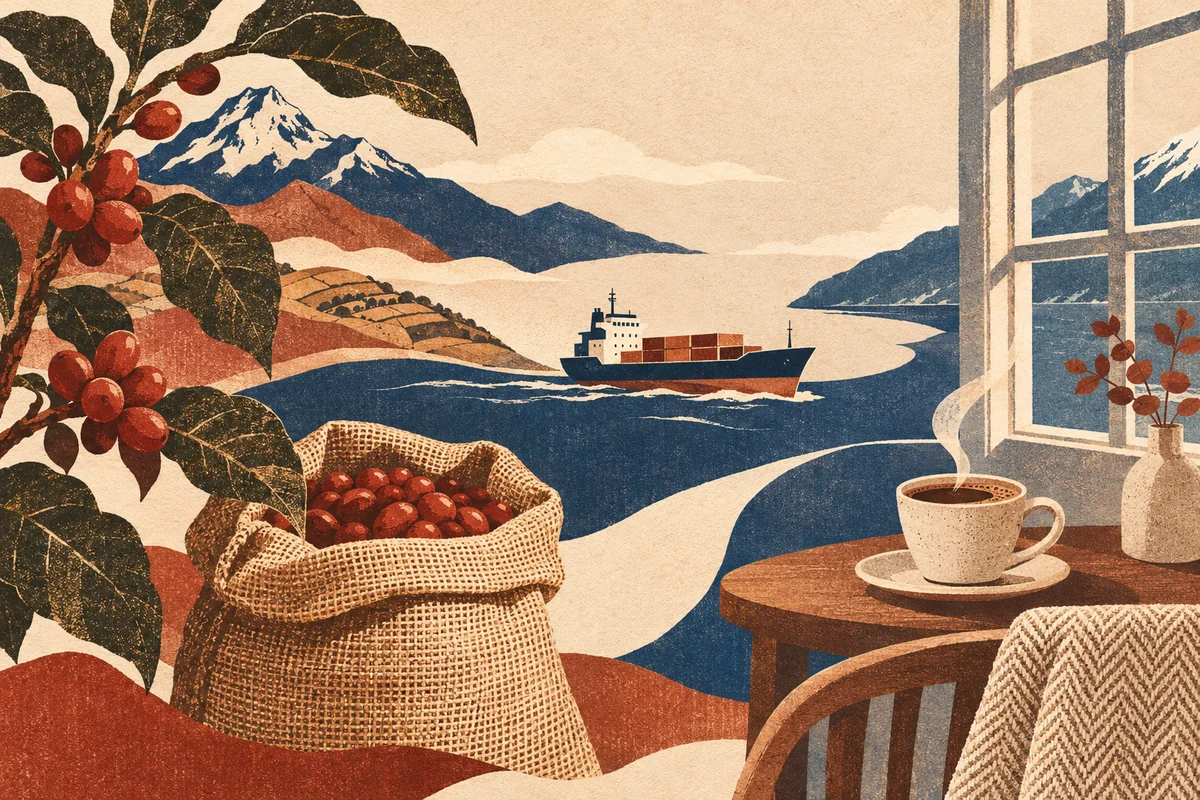
Picture a plain bag of Peruvian coffee on a café shelf in Stockholm. This is an imagined example, not a shipment we have traced. The label tells you an origin and perhaps a roast date. It is tempting to turn those few details into a complete journey: a farmer, a mountain road, a port, a ship and a roaster. Each step needs its own evidence.
The interesting question is how much of that journey a reader can reconstruct. A country name, a purchase invoice and a producer’s account answer different questions. Together they can make a better story than an attractive origin label alone.
One product name, two origins
A concrete example is Johan & Nyström’s description of Perduras. The Swedish roaster says this coffee changes origin with the season: Incahuasi in Peru and Comicovel in Honduras. It describes Incahuasi as a cooperative in the Cusco region and says it has bought its coffee since 2016. These are statements from the roaster’s own product page, checked for this article, rather than findings from an independent farm visit.
That example changes how a reader approaches a familiar product name. A name can remain on a shelf while the coffee inside follows a seasonal sourcing description. To understand a particular bag, the current origin and lot information matter. The product page establishes a stated commercial connection; it does not tell us the route or documents for every shipment.
Source: Johan & Nyström: Perduras product and producer description, checked 6 November 2026
A country is the beginning of a story
UN Comtrade’s data interface distinguishes products, reporting countries, partners, periods and trade flows. Those choices matter before a number is copied into an article. Green coffee, roasted coffee and a broad product grouping describe different things; so do a month, a calendar year and a comparison across years.
A useful research note records the exact query beside the result. Which country reported it? Which partner was selected? What product description and classification were used? That small habit keeps the next reader from treating two unlike tables as the same measurement.
For our imagined bag, a national trade table would provide context. It would not supply the café’s purchase order or identify the farm behind that particular packet. The article becomes more precise when it describes the scale of its evidence: a market, a company, a shipment or a lot.
Follow the handovers
At each handover, ask what changed and what document could establish it. A producer’s lot identifier might connect a harvest to an exporter’s record. A buyer’s invoice might explain what was purchased. A roaster’s batch record might connect those beans to a finished product. These are questions for a real investigation, not documents this edition claims to possess.
The people in that chain deserve the same precision. A cooperative name on a bag does not tell us who negotiated a contract, performed the processing or carried the commercial risk. Rather than filling those gaps with a picturesque scene, a writer can ask the business for a clearer account and distinguish its answer from independently checked records.
What a better coffee story looks like
A good ending may be modest: we know the stated origin, the product category and the seller’s description, while the farm-level connection remains unverified. That is still useful information. It tells a reader which details are documented and which questions to take back to the supplier.
Try the same exercise with something already in your kitchen. Write down the claims printed on its packaging, the evidence available for each, and one question the label leaves unanswered. The object becomes a starting point for understanding how distant places meet in an ordinary purchase.